
Paz de Westfalia, 1648 – Párrafos I y II, resumen
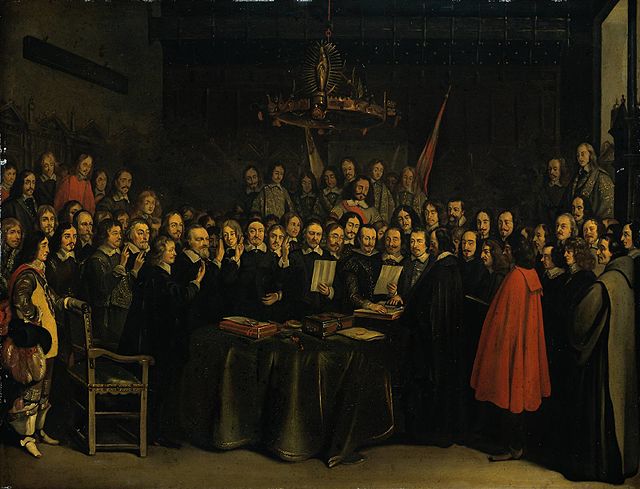
En el Tratado de Paz de Münster de 1648, las potencias firmantes acordaron inicialmente el entendimiento general de la paz. Consideraron que lo mejor era comenzar con una amnistía. Esto significaba olvidar todo lo sucedido durante la guerra para facilitar un nuevo comienzo pacífico. Los dos primeros artículos se leían en el lenguaje tortuoso de la época:
Se han acordado y consentido los siguientes artículos:
I. Que habrá una paz cristiana y universal y una amistad perpetua, verdadera y sincera entre todos y cada uno de los aliados de un lado y todos los del otro. Que esta paz y amistad se observarán y cultivarán con tal sinceridad y celo que cada parte se esforzará por procurar el beneficio, el honor y la ventaja de la otra; que así, en todas las partes, puedan ver florecer esta paz y amistad en el Imperio alemán y el Reino de Francia mediante el mantenimiento de una buena y fiel vecindad.
II. Que habrá, tanto para un bando como para el otro, olvido, amnistía o indulto perpetuo de todo lo cometido desde el inicio de estos disturbios, independientemente del lugar o la forma en que se hayan llevado a cabo las hostilidades. Nadie, bajo ningún pretexto, podrá cometer actos de hostilidad ni causar disturbios entre sí, ni en privado ni abiertamente. Pero que todo lo ocurrido entre ambos bandos, tanto antes como durante la guerra, en palabras, escritos y actos atroces, en violencias, hostilidades, daños y gastos, sin consideración alguna a personas o cosas, será completamente abolido. De tal manera que todo lo que pudiera exigirse mutuamente en ese sentido quedará sepultado en el olvido eterno.
¿Crees que es mejor olvidar lo que pasó durante un conflicto para poder empezar de nuevo, o recordar lo que pasó para facilitar la reconciliación?
Puede encontrar más información sobre la Paz de Westfalia en On Site, In Time.
Para obtener más información sobre este y otros tratados de paz, consulte